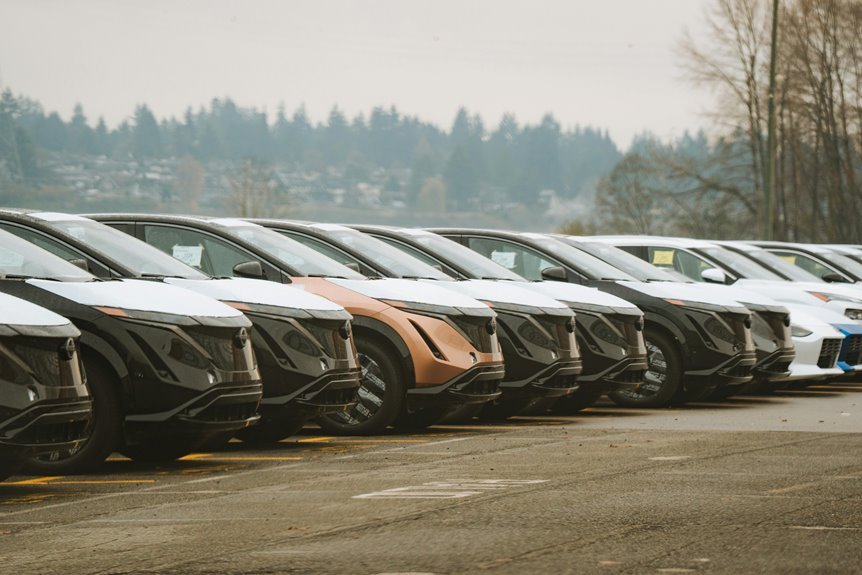
You’re witnessing a pivotal shift in the automotive sector, particularly with electric vehicles (EVs). Enhanced battery technologies and charging infrastructure are reshaping consumer choices, making EVs more appealing. However, manufacturers still grapple with supply chain issues and regulatory changes. As the market evolves, the potential for innovation grows. What strategies will emerge next to meet both consumer demand and sustainability goals? The answers may redefine the industry’s landscape.
Current Trends in Electric Vehicles
As the automotive landscape shifts towards sustainability, electric vehicles (EVs) are emerging as a dominant force in the market.
Enhanced battery technology is extending range and efficiency, making EVs a practical choice for more drivers.
Meanwhile, the expanding charging infrastructure is alleviating range anxiety, supporting your freedom to travel without limits.
Together, these trends are shaping a future where EVs are increasingly viable and desirable.
Consumer Preferences and Market Demand
While many consumers are increasingly prioritizing sustainability, their preferences are also being shaped by factors such as technology, price, and convenience.
Understanding consumer behavior reveals significant market shifts; buyers now seek vehicles that integrate advanced technology and deliver cost-efficiency.
As you navigate these changes, aligning your choices with evolving demands can enhance your driving freedom and satisfaction.
Challenges Facing Automotive Manufacturers
Shifting consumer preferences toward sustainability and advanced technology create a complex landscape for automotive manufacturers.
You face significant challenges, including navigating supply chain disruptions and overcoming regulatory hurdles.
These factors not only impact production costs but also your ability to innovate.
Staying agile and adaptable is crucial for meeting evolving demands while maintaining compliance and ensuring a competitive edge in the market.
Future Innovations and Technology in the Industry
Although the automotive industry faces numerous challenges, the future is ripe with innovations that promise to reshape mobility.
Expect autonomous vehicles to enhance safety and reduce traffic congestion, while connected cars will offer seamless integration with your digital life.
These technologies not only empower personal freedom but also drive efficiency, shaping a smarter, more sustainable driving experience that meets modern demands.
Conclusion
As you navigate the evolving landscape of the automotive industry, envision a future where electric vehicles glide silently along vibrant city streets, their sleek forms reflecting a commitment to sustainability. With cutting-edge battery innovations and a robust charging network, the path ahead is illuminated. Embracing these changes, manufacturers are not just adapting; they’re pioneering a revolution. The growing consumer demand for eco-friendly options signals that electric vehicles aren’t just a trend—they’re the heartbeat of tomorrow’s automotive market.